Core Elements of Manchester United Marketing Strategy

Manchester United’s marketing strategy focuses on maintaining a strong global presence, fostering direct connections with fans, and precisely targeting different segments of its wide audience. These efforts are designed to amplify the club’s brand value and commercial reach.
Global Brand Identity
Manchester United’s brand is recognized worldwide due to its long history, Premier League successes, and association with iconic players like Paul Pogba. The club leverages this global appeal through consistent branding across all platforms, including digital and traditional media.
Their iconic red jersey and the heritage of Old Trafford play key roles in reinforcing identity. Partnerships with multinational sponsors and strategic global campaigns help Manchester United extend its reach beyond the UK, targeting markets in Asia, the Americas, and beyond.
The club also integrates storytelling about its legacy and player personalities in its digital content, enhancing emotional ties with fans internationally, which strengthens loyalty and drives merchandise sales globally.
Fan Engagement Initiatives
Manchester United deploys interactive and digital strategies to keep its global fan base actively engaged. Social media campaigns, exclusive online content, and virtual experiences provide real-time updates on Premier League matches and player activities.
The club’s digital marketing includes apps, live streams, and fan forums tailored to different regions, fostering community among supporters. Events at Old Trafford, both on match days and off-season, also boost engagement by offering unique experiences.
By integrating fan data and feedback, Manchester United continually refines its communication to offer personalized content, keeping supporters connected and involved regardless of their location.
Segmentation and Targeting
Manchester United applies detailed market segmentation to tailor its marketing efforts effectively. The strategy identifies distinct groups based on geography, age, and interests, allowing personalized promotions and campaigns.
For instance, youth-focused content highlights rising stars and interactive games, while merchandise targeting may vary by region according to local preferences and income levels. This approach maximizes engagement and conversion across diverse demographics.
The club targets both loyal, long-term fans and casual viewers, using analysis of fan behaviors and preferences. This segmentation supports the club’s objective to expand its fan base while maintaining strong connections with existing supporters globally.
For further insights, see Manchester United’s marketing strategy analysis.
Digital and Content-Driven Marketing Channels
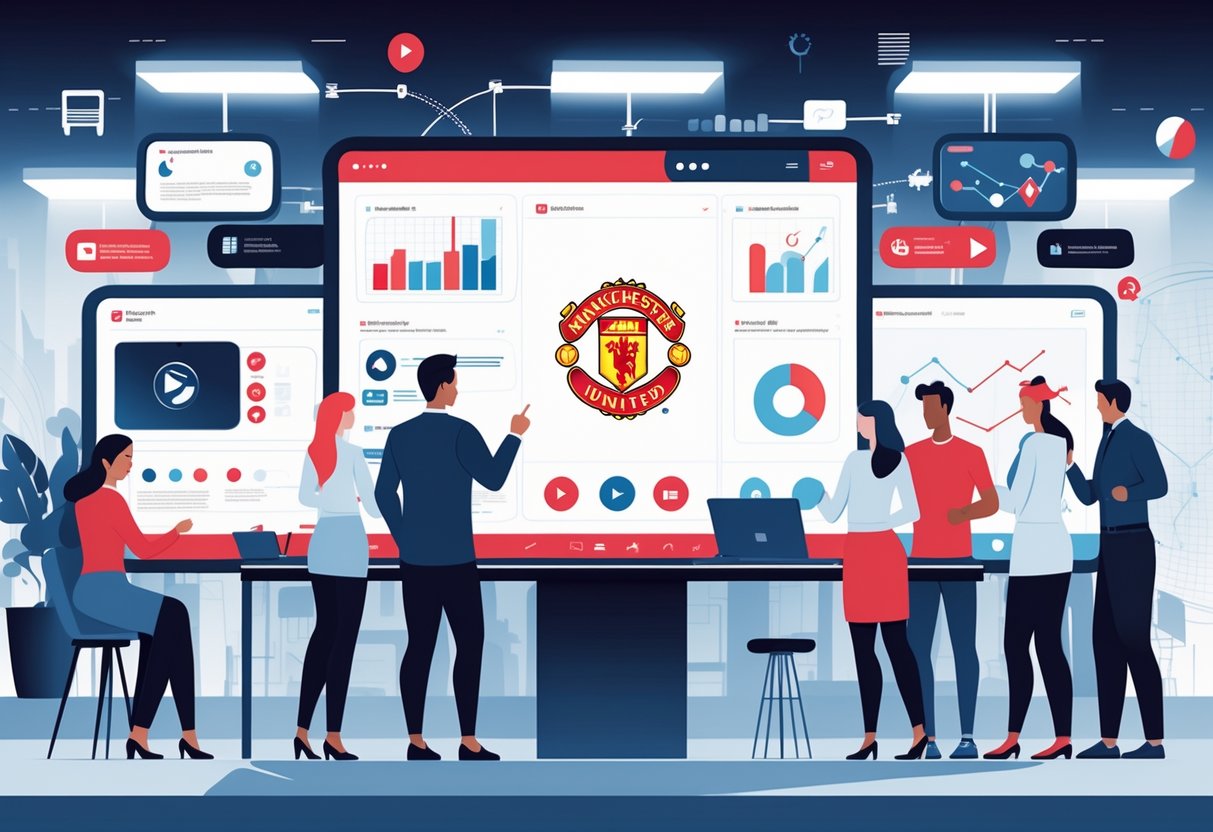
Manchester United’s digital marketing relies heavily on owned platforms that deliver exclusive content and seamless fan interaction. It uses advanced technology to keep fans connected globally and engages different audience segments through tailored digital experiences.
Official Website and Mobile App
Manchester United’s official website functions as a central hub for news, match updates, ticket sales, and merchandise. It provides a comprehensive experience with sections dedicated to team news, player profiles, and historical archives. The website also integrates e-commerce and subscription services, driving direct revenue.
The club’s mobile application complements the website by offering live match statistics, push notifications, and exclusive video content. Available on iOS and Android, the app includes interactive features such as polls and quizzes that enhance fan engagement.
Both platforms are optimized for quick loading and easy navigation and are integrated with social media to amplify real-time interaction. The app’s compatibility with devices like Amazon Fire and Xbox extends accessibility for fans worldwide.
Social Media Presence
Manchester United maintains an active presence on Twitter, Facebook, and Instagram, using each platform to target specific fan demographics. Twitter delivers real-time updates during matches and breaking news.
Instagram focuses on visual storytelling, sharing behind-the-scenes content, player activities, and promotional campaigns. Facebook offers a broader communication channel with a mix of video, articles, and event promotions.
These platforms support interactive campaigns, competitions, and live Q&A sessions. By utilizing data analytics, the club tailors content to fan interests and regional preferences, maximizing engagement worldwide.
YouTube Channel and MUTV
The YouTube channel is a vital asset for distributing highlights, interviews, and exclusive behind-the-scenes footage. It regularly features training sessions, historical retrospectives, and fan stories, which increase global reach.
MUTV, the club’s own television network, offers subscription-based content including live match coverage, documentaries, and special programming. Available across multiple digital platforms, MUTV creates a premium content environment solely focused on the club.
Both platforms emphasize high-quality production and exclusive access, creating a unique content ecosystem that reinforces brand loyalty and drives digital subscriptions. They also integrate with the website and app for seamless user experience.
Commercial Partnerships and Revenue Streams
Manchester United generates significant income from diverse commercial partnerships and revenue streams. The club’s strategy leverages high-value sponsorship deals, extensive merchandising efforts, and lucrative broadcasting rights. These components collectively drive revenue and boost the club’s global brand presence.
Sponsorship Strategy
Manchester United secures multi-million-pound sponsorship agreements with global corporations. Adidas, the club’s official kit supplier, has a long-term deal that provides substantial annual revenue. Chevrolet was a primary shirt sponsor until 2021, demonstrating the club’s ability to attract major automotive brands.
The club also partners with companies like Kohler for sleeve sponsorships and collaborates with international firms spanning industries such as technology, finance, and consumer goods. These partnerships enhance visibility on kits, training gear, and digital platforms, capitalizing on Manchester United’s worldwide fan base.
Additionally, sponsorship deals extend beyond the pitch. Strategic affiliations with regional and global brands support marketing campaigns and pre-season tours, such as matches against teams like Real Madrid or promotional ties with entities like the NFL, further diversifying revenue.
Merchandising and Retail Approach
Manchester United’s merchandising revenue is a key pillar of its commercial operation. The club offers a wide range of products including jerseys, apparel, memorabilia, and accessories, appealing to fans globally.
Official merchandise is available through multiple channels: physical stores, the club’s online shop, and partnerships with major retailers like Amazon. In 2022, merchandise sales accounted for approximately £130 million, reflecting the strength of its fan engagement and market penetration.
Special editions and collaboration lines amplify appeal, while digital marketing efforts target segmentation and geographic expansion. The retail strategy also intersects with tour merchandising, capitalizing on fan interest during events such as pre-season games.
Broadcasting and Media Rights
Broadcasting rights form a vital revenue stream for Manchester United, generated from both domestic and international deals. The club benefits from Premier League contracts that ensure stable income alongside prize money from competitions.
Internationally, broadcast partners distribute content worldwide, maximizing audience engagement and commercial value. Media rights arrangements often include streaming, highlights, and club-produced content, aligning with digital trends.
These rights also complement sponsorship and merchandising efforts by expanding the club’s footprint in key markets. Carefully negotiated deals with broadcasters help maintain Manchester United’s position as one of football’s most commercially lucrative clubs.
For more detailed insight, see the analysis of Manchester United’s business model and commercial partnerships.
