Core Elements of Microsoft Marketing Strategy

Microsoft’s marketing relies on precise messaging, segmented audiences, tailored product promotion, and strategic campaigns. These core elements work together to maintain Microsoft Corporation’s position as a leader in technology innovation and customer experience.
Brand Positioning and Messaging
Microsoft positions itself as a global technology innovator focused on empowering individuals and organizations. Its messaging centers on productivity, security, and seamless integration across devices and platforms. This approach reflects its customer-centric philosophy, rooted in solving real-world problems with reliable technology.
The brand emphasizes trust and innovation, reinforcing its legacy from founders Bill Gates and Paul Allen while evolving with cloud computing and AI advancements. Messaging consistently highlights Microsoft’s broad product ecosystem, from Azure and Microsoft 365 to Xbox, ensuring each offering fits within a unified, accessible digital environment.
Market Segmentation and Targeting
Microsoft segments markets by industry, business size, and user needs, allowing precise targeting. Key segments include enterprise customers, small-to-medium businesses, developers, and individual consumers. Each segment receives tailored messaging based on their unique challenges and technology requirements.
For enterprise clients, Microsoft targets IT professionals with cloud solutions like Azure. Consumers are engaged through gaming and productivity tools. This segmentation supports personalized marketing campaigns that increase relevance and customer retention. Data analytics and insights play a central role in refining targeting to optimize engagement and conversion rates.
Product Marketing Strategy
Microsoft’s product marketing integrates innovation with clear communication of benefits. The strategy highlights product differentiation through features like scalability, security, and interoperability. Each product launch includes detailed positioning to showcase how it fits within Microsoft’s larger portfolio.
For example, Microsoft 365 is marketed as a comprehensive productivity suite, while Azure is promoted as a flexible cloud platform. Marketing efforts leverage demos, trials, and partnerships with industry leaders to drive adoption. The strategy ensures consistent product messaging aligned with customer needs and evolving tech trends.
Key Marketing Campaigns
Microsoft’s marketing campaigns focus on driving engagement through a mix of digital, traditional, and event-based channels. Recent campaigns emphasize AI and cloud integration, showcasing Microsoft’s leadership in digital transformation. Notable examples include campaigns around Microsoft Azure’s scalability and Microsoft Teams’ collaboration tools.
Campaigns utilize storytelling to connect with business leaders and everyday users, often highlighting customer success stories. Additionally, Microsoft invests heavily in omnichannel marketing, blending online presence with real-world events to enhance customer experience and brand loyalty. This ensures broad reach with consistent messaging across platforms.
For detailed insights on Microsoft’s marketing approaches, see Microsoft Marketing Strategy (2025) at businessmodelanalyst.com.
Microsoft’s 4P Marketing Mix
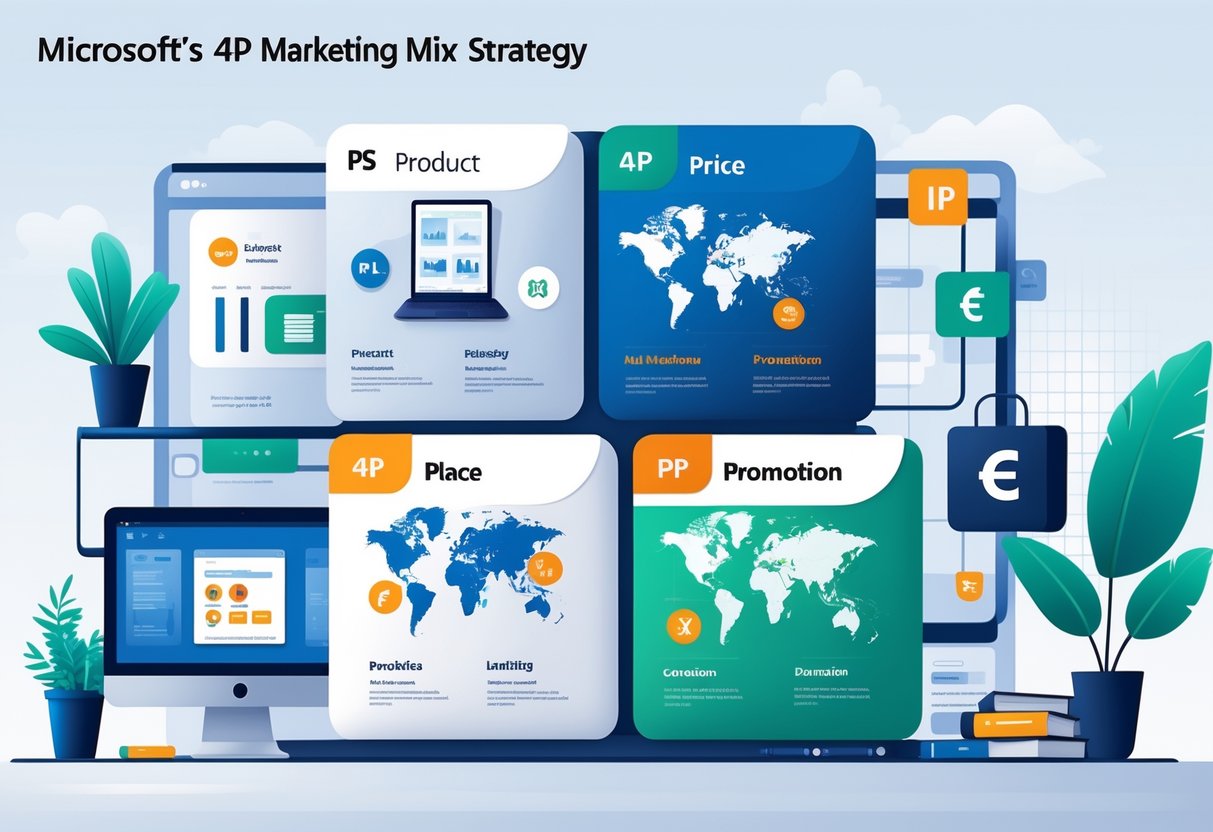
Microsoft structures its marketing strategy through a comprehensive approach that integrates product innovation, competitive pricing, global distribution, and dynamic promotion. This multi-faceted method supports its diverse portfolio, from software and hardware to cloud solutions and entertainment.
Product Mix and Offerings
Microsoft’s product mix spans software, hardware, and cloud services, addressing both consumer and enterprise needs. Core software offerings include the Windows operating system, with iconic versions like Windows 95 and Windows 11, and productivity suites such as Microsoft Office, Microsoft 365, and Office 365, which include Word, Excel, and PowerPoint.
On the hardware side, Surface devices—comprising Surface laptops and tablets—highlight Microsoft’s commitment to premium design and integrated performance. The Xbox gaming consoles, including Xbox Series X|S, target the entertainment segment, supported by services like Xbox Game Pass.
Additionally, Microsoft invests heavily in cloud computing via Azure, serving business customers with scalable, reliable cloud services. This diverse product mix positions Microsoft as a leader across technology categories.
Pricing Strategies
Microsoft employs varied pricing strategies to maximize market reach and revenue. Its software and cloud services often use a subscription-based model, evident in Microsoft 365, which replaces one-time purchases with recurring payments for continuous updates and support.
For consumer applications, a freemium pricing strategy is common, offering basic versions of products like Office apps or Xbox Game Pass access for free while charging for premium features or content.
Hardware products such as Surface devices and Xbox consoles are priced competitively against market rivals, balancing affordability with premium positioning. Volume licensing and enterprise agreements also play a key role in Microsoft’s pricing for business customers, creating scalable options based on organization size and needs.
Place Strategy and Distribution
Microsoft uses a combination of direct and indirect channels to distribute its products globally. The official Microsoft website serves as a primary channel for software downloads, subscriptions, and Surface devices.
Physical retail stores and authorized dealers stock Surface hardware and Xbox consoles to provide customer interaction and immediate purchase options. Digital marketplaces, including the Microsoft Store and Xbox store, enable seamless access to apps, games, and media content worldwide.
Additionally, Microsoft leverages partnerships with global distributors and resellers to reach enterprise clients and smaller businesses, ensuring availability through established distribution networks and cloud service providers.
Promotion Strategy and Channels
Microsoft’s promotion strategy blends traditional and digital marketing to engage multiple audiences. The company invests heavily in digital marketing, including content marketing, social media platforms, SEM, and targeted advertising campaigns.
Product launches and updates are supported by public relations efforts and direct marketing, including personalized offers and outreach for Microsoft 365 and Azure customers. Gaming products like Xbox benefit from influencer partnerships and experiential marketing through events and online communities.
Microsoft also uses integrated marketing communications to reinforce brand messages across platforms, promoting productivity, innovation, and ecosystem connectivity. This diverse promotional mix ensures consistent engagement from consumers to enterprises.
Strategic Partnerships, Innovation, and Social Impact
Microsoft’s approach integrates collaboration, cutting-edge technology, and purposeful social programs. This combination strengthens its market presence while driving progress in accessibility and education worldwide.
Partnerships and Developer Ecosystem
Microsoft leverages strategic partnerships to extend its reach and product capability. Collaborations with companies like Intel and the integration of LinkedIn enhance its position in business and professional networking.
The company actively supports developers through its robust developer ecosystem, offering tools, APIs, and platforms to build on Azure and other Microsoft technologies. This ecosystem fuels innovation and strengthens customer relationship management by delivering tailored business solutions.
Satya Nadella emphasizes open collaboration and shared innovation, notably including partnerships with AI pioneers like OpenAI. These alliances accelerate AI integration across Microsoft’s portfolio, keeping it competitive in cloud computing and enterprise services.
Innovation and Technology Leadership
Innovation remains central to Microsoft’s strategy. It focuses strongly on artificial intelligence and cloud technologies to maintain technology leadership. The company invests heavily in AI research and development, enhancing products such as Microsoft 365, Azure, and Dynamics 365.
By incorporating AI-driven features, Microsoft improves productivity and operational insights for businesses. Its commitment to digital transformation supports clients in adapting to fast-paced technological changes across industries.
Microsoft’s innovation also includes continuous improvement of accessibility features. This ensures inclusivity within software and hardware, expanding global accessibility and empowering diverse user groups.
Corporate Social Responsibility Initiatives
Microsoft integrates corporate social responsibility (CSR) into its core operations. It runs educational initiatives focused on digital skills development to prepare individuals for emerging job markets.
Programs targeting accessibility promote technology use among people with disabilities, reinforcing the company’s commitment to inclusiveness. Microsoft also supports sustainability efforts aligned with environmental goals.
CSR at Microsoft includes transparent reporting and engagement with stakeholders to address social and ethical challenges. This approach enhances brand trust while fostering positive community impact globally.
Learn more about Microsoft’s marketing strategy
Details on Microsoft’s corporate social responsibility
