Core Elements of the Uber Eats Marketing Strategy
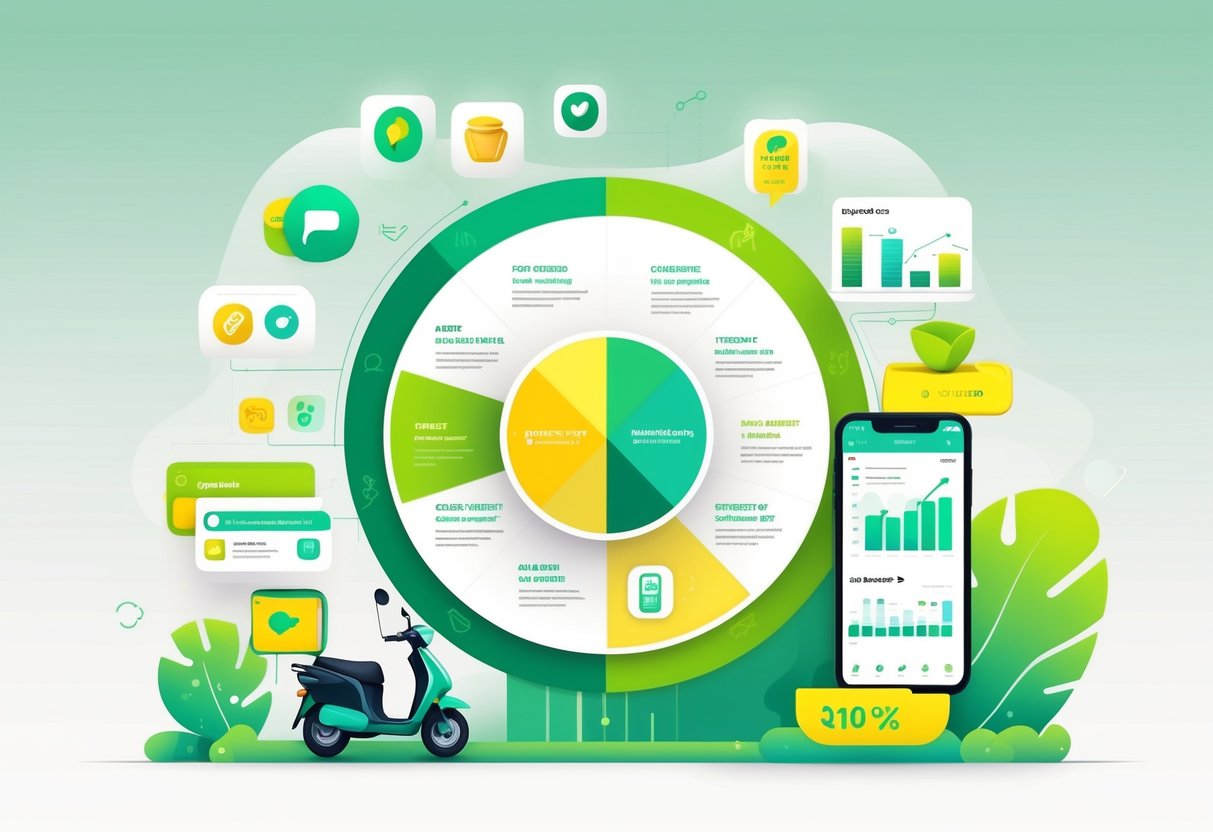
Uber Eats focuses on delivering convenience, fast service, and broad product offerings to maintain its competitive edge. It builds strong brand awareness through targeted positioning and integrates multiple delivery options to meet diverse customer needs.
Unique Value Proposition and Brand Positioning
Uber Eats positions itself as a convenient, reliable, and fast food delivery platform that connects customers with a range of local restaurants. Its brand emphasizes simplicity and accessibility, leveraging Uber’s existing reputation in urban mobility.
The platform highlights speed of delivery, a user-friendly app, and a vast selection of cuisines. It uses digital marketing and social media to reinforce brand messaging, targeting diverse demographics across urban centers.
Promotions and personalized offers strengthen customer retention without relying solely on discounts. This approach enhances perceived value while maintaining profitability levels.
Integrated Food and Grocery Delivery Approach
Uber Eats has expanded beyond restaurant food orders to include grocery delivery, integrating both services seamlessly within its app. This strategy taps into growing consumer demand for diverse, on-demand delivery options.
By uniting food and grocery delivery, Uber Eats maximizes user engagement and frequency of app usage. The platform leverages data analytics to optimize delivery routes and promote relevant products.
This dual offering differentiates Uber Eats in the competitive market, addressing customer needs for both immediate meals and essential groceries efficiently.
Customer Experience and Fast Delivery
Fast, reliable delivery is central to Uber Eats’ customer experience strategy. The company invests in technology to reduce wait times and offers real-time tracking for transparency.
Customer support, an intuitive app interface, and flexible payment methods enhance user satisfaction. It also uses feedback loops to continuously improve service quality.
Driver-partners are incentivized for timely deliveries, which upholds Uber Eats’ reputation for speed and reliability crucial to retaining customers in the food delivery app space.
Expansion into New Verticals
Uber Eats pursues growth by entering new verticals, such as convenience store items and alcohol delivery, broadening its market presence. This diversification leverages its existing logistics network.
The strategy includes partnering with specialized retail outlets to access new product categories, thus increasing order volume and revenue streams.
By expanding services, Uber Eats adapts to shifting consumer preferences and strengthens its position as a one-stop delivery platform for urban customers. More details can be found in their business strategy insights.
Digital Marketing Tactics and Customer Engagement

Uber Eats uses targeted digital strategies to increase app visibility, engage users, and drive repeated orders. Their approach spans optimizing search presence, offering strategic promotions, nurturing loyalty, and delivering tailored content through direct communication channels.
App Store Optimization (ASO) and Local SEO Strategies
Uber Eats prioritizes App Store Optimization (ASO) to improve downloads and visibility in both iOS and Android app stores. This includes using high-impact keywords, captivating screenshots, and positive user reviews to enhance ranking.
Locally, the platform leverages Local SEO to connect consumers with nearby restaurants. Geo-targeted keywords and localized landing pages help Uber Eats appear in relevant searches for food delivery, increasing online ordering from diverse neighborhoods. This dual focus improves organic acquisition without inflating the marketing budget.
Promotional Campaigns and Limited-Time Deals
Promotions remain central to increasing order frequency and attracting new users. Uber Eats regularly launches limited-time deals like discounts on popular meals or free delivery offers in specific cities.
These campaigns often run across multiple marketing channels including social media, in-app notifications, and email. The timing and targeting of these promotions are data-driven, maximizing impact during peak order periods and special events. This targeted promotion strategy balances customer acquisition costs while boosting short-term sales.
Loyalty Programs and Customer Retention
Uber Eats implements loyalty programs to increase customer lifetime value by rewarding frequent users. These programs provide points or credits redeemable for discounts on future orders, encouraging repeat business.
The loyalty strategy is integrated with personalized messaging to remind users of benefits and stimulate continued engagement. By focusing on retention, Uber Eats reduces reliance on costly acquisition tactics and strengthens long-term revenue streams.
Email Marketing and Content Marketing Initiatives
Email marketing supports Uber Eats’ retention and promotional efforts through tailored newsletters and personalized offers. Emails highlight new restaurant partners, exclusive deals, and curated content like meal recommendations.
Content marketing complements this with blog posts and video campaigns designed to engage users and promote brand identity. These initiatives help Uber Eats maintain a consistent dialogue with customers, nurturing relationships beyond simple transactions. This blend of email and content marketing optimizes the marketing budget by leveraging owned channels.
Performance Measurement and Feedback Integration
Effective measurement and active feedback utilization allow Uber Eats to refine its marketing efforts and improve service quality. Continuous data analysis informs decision-making, while customer input shapes enhancements focused on retention and engagement.
Analyzing Customer Reviews and Feedback
Uber Eats systematically collects and examines customer reviews and feedback across platforms like the app, social media, and surveys. This data highlights satisfaction drivers and identifies pain points such as delivery speed, food quality, or app usability.
The company uses sentiment analysis to categorize feedback into actionable insights. For example:
- Positive reviews may emphasize ease of use or promotional offers.
- Negative feedback often points to delivery delays or order accuracy issues.
This evaluation helps prioritize improvements and tailor marketing messaging to address common concerns. It also supports customer loyalty programs by identifying what customers value most.
Optimizing the Marketing Plan Using Data
Uber Eats employs real-time analytics and historical benchmarks to adjust its marketing plan dynamically. Campaign performance is tracked through key metrics like conversion rates, customer acquisition cost, and repeat purchase frequency.
Data-driven adjustments include:
- Refining digital ad targeting on platforms such as Instagram and Facebook.
- Modifying promotional offers based on customer response patterns.
- Allocating budget to channels with higher engagement and ROI.
This approach ensures marketing investments align with consumer behavior and market trends. Integrating feedback loops with performance metrics allows Uber Eats to adapt swiftly, maintaining competitive advantage and improving overall campaign effectiveness. For more details, see Uber Eats’ methods for analyzing customer feedback and measuring advertising impact.
